Sunday, 17 September 2023

 Here are other achievements of India in 75 days of 2023

  • Bangalore Mysore Expressway started.
  • A section of the Delhi-Mumbai Expressway was opened.
  • The permanent campus of IIT Dharwad was inaugurated.
  • India named 21 islands of the Andaman and Nicobar Islands after Param Vir Chakra winners.
  • India has launched E20 fuel by blending 20 per cent ethanol in petrol.
  • Asia's largest modern helicopter factory has been inaugurated in Tumkuru.
  • Air India placed the world's largest aviation order.
  • India has achieved the milestone of 10 crore tele-consultations through e-Sanjeevani.
  • India achieved the milestone of providing 8 crore new tap water connections.
  • The work of 100 per cent electrification of the rail network in UP-Uttarakhand was completed.
  • Indian Women's cricket team won the inaugural U-19 T20 World Cup.
  • India celebrated the victory of winning 2 Oscar awards.

Saturday, 4 December 2021

 "Your heart is slightly larger than the average human heart, but that's because you're a teacher." "

Friday, 14 July 2017

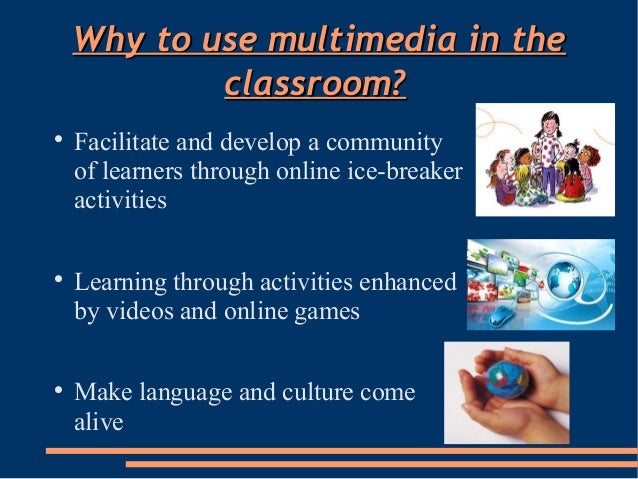
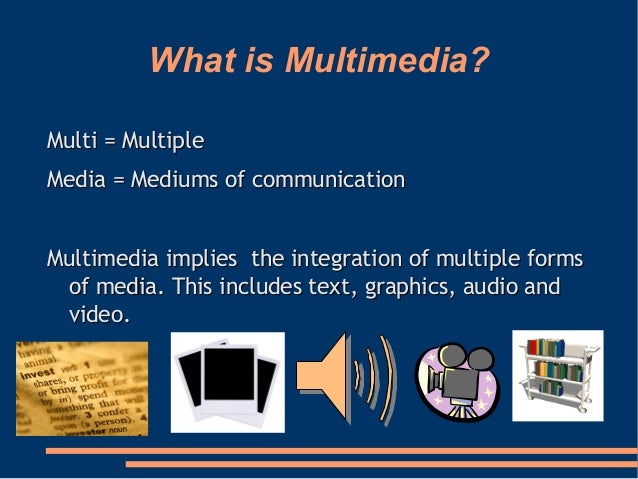
multimedia usage

Why to use multimedia in theWhy to use multimedia in theclassroom?classroom?Facilitate and develop a communityof learners...
Peer tutoring is a flexible, peer-mediated strategy that involves students serving as academic tutors and tutees. Typically, a higher performing student is paired with a lower performing student to review critical academic or behavioral concepts.

According to Robert Thomas ,it is the process by which a competent pupil,with minimal training and with teacher's guidance,helps one or more students at  the same grade leve learn a simple skill or basic concept "


What is Multimedia?Multi = MultipleMulti = MultipleMedia = Mediums of communicationMedia = Mediums of communicationMultime...

Saturday, 10 September 2016

curriculum transaction...face to facemode and ICT enabled mode

Curriculum Transaction
Curriculum Transaction is the effective and desired implementation of the curriculum contents on the basis of aims and objectives listed in the curriculum. Curriculum Transaction incorporates effective planning for providing learning experiences for its learners, organization of planning, administration/implementation of the organized planning and evaluation of the implementations by the implementer and the experts in the relevant field.
Modes of Curriculum Transaction
Transactional modes have essentially been of two categories, First one is face-to-face mode and the second is distance mode.
1.      The face-to-face mode refers to instructional interactions in which learners and the teacher transact a curriculum in a face-to-face situation.  This mode includes inputs like seminars, discussions, lectures, demonstrations and any activity involving direct interaction between the learners and the teacher. The face-to-face mode is the oldest and most widely accepted mode.   Obviously, at a time when electronic media were not available and even the print medium was unknown, the most easily accessible channel for transmission of knowledge and for communication was through face-to-face interaction with the teacher.  With printing and the public school system, text books became available and assumed significance.  Over the years, the print medium has provided support to oral communication with the teacher, as the main focus in schools
2.   The distance mode, as the term indicates, pertains to all kinds of interactions between the teacher and learners in which they are not in direct contact with one another and require a third channel or medium for contact.   These include the print, audio, video, or any other mode.  Open learning systems generally utilize such modes.  Due to the indirectness of the contact or the distance between the teacher and learner, none of these media can by itself suffice for effective instruction.  They are, therefore, used in combination in order to make experiences more 'realistic' and meaningful.  Of late, more interactive media have been designed and utilized, such as interactive satellite television or teleconferencing.   The two modes need not be mutually exclusive. Correspondence education acquired significance as an alternative to 'teacher talk' in India, with increased availability of printing facilities.  As correspondence education widened with the emergence of open learning system, the media of transaction were diversified to include audio, visual and audio-visual mechanisms.  More recently, interactive television has come to be used for communication of knowledge.  The use of media has resulted in new roles for a teacher:  that of a designer and developer of these media making them suitable for instructional purposes, and that of a user of these during instruction

Friday, 9 September 2016

CRITICAL PEDAGOGY


In order to understand how critical pedagogy can be applied and how it may be demonstrated in the classroom.  Understanding that critical pedagogy is a movement in which in education it empowers students and teachers to recognize hegemony tendencies by developing consciousness social justice and connecting the knowledge to taken action and creating change. Critical pedagogy is based on  Paulo Freire, who is known to be the founder of critical pedagogy.  His philosophies centered on adult education


 Discourse
The teacher can either pose a question or an idea as students interact in conversation about the particular subject selected. A teacher can also pose a problem that exists in their community. The students learn about the idea as they interact in discourse with the teacher, members of community, and between students.

Guided by the Teacher
The teacher guides the students to the objective, that is what they are going to learn through the use of past events in history or current events that are occurring.   The activities selected by the teacher promote communication and allows the student to view other perspectives and incorporate real-word experiences.  However, the idea or concept they  learn is relevant in some way to the students. A possible event in history that impacted their community connected to a world event, similar to the video can be used in the lesson.

Students' Create/Explore/Develop

The teacher allows the students to expand on the idea  or  point of view the teacher wants them to understand and reflect. This is similar to the exploration and evaluation of the 5 E model.  However, students do not use materials given by the teacher.  The  students input is based on what they think and particularly seeking the right or wrong answer is not the objective of the lesson.  Students should feel empowered in learning.  The outcome of the lesson depends on the students interest and effor

Friday, 11 March 2016


NETWORK TWINNING

 Introduction

  In today’s global world, increasing organizational learning as well as generating new knowledge is crucial to maintain and enhance competitiveness. As a consequence, development of organizational learning seems to promise the challenges created by increased international competition and the growing importance of innovation in the knowledge society. Therefore, the question of institutional development becomes a key element for assessing and strengthening the overall development of an organization’s effectiveness. In relation to this, the idea of ‘twinning strategy’ has become a vehicle for sustainable organizational learning means, for building and strengthening institutional capacity. In another way, it can be said that it is prerequisite for sustaining organizational competitiveness and enhancing research performance

                                                       Network Twinning

                                According to the Swedish International Development Co-operation Agency (SIDA), 'twinning' is the distinctive method for promoting institutional capacity building and improving knowledge transfer between research institutions  that will embrace open innovation and development co-operation. On the other hand, World Bank, defines twinning as a “process that pairs an organizational entity in a developing country with a similar but more mature entity in another country,” and recognizes the method as one of its four primary technical assistance delivery modes, along with long-term advisors, short-term advisors, and training. In simple terms we can refer Twinning as a practice whereby two (sometimes more) schools in different regions or in different countries help each other with the help of information technology. Students may spend time in the twin school to gain experience they would not get in their home school. Faculty may be exchanged, resources are also shared.


                 Professional and institutional growth

                                The Network Twinning or e - Twinning action is an initiative of the European Commission that aims to encourage European schools to collaborate using Information and Communication Technologies (ICT) by providing the necessary infrastructure (online tools, services, support). Therefore, teachers registered in the Network Twinning action are enabled to form partnerships and develop collaborative, pedagogical school projects in any subject area with the sole requirements to employ ICT to develop their project and collaborate with teachers from other  countries. The primary workspace for the network Twinning action, is the e -Twinning Portal (www.etwinning.net) and it is available in twenty-five languages. Teachers registered in the e-Twinning action, also called e-Twinners, find each other, communicate, share resources and collaborate through the e-Twinning platform. E twinning is regarded as the educational communities in Europe. Teachers from all participating countries can register on the portal and use the e Twinning online tools to fund each other , meet virtually, exchange ideas and practice examples, team up in e-Twinning groups, learn together in learning events and engage in online based projects.


 The main concept behind Twinning is that schools are paired with another school elsewhere and they collaboratively develop a project which is known as twinning project. The two schools then communicate using the internet via email or video conferencing to collaborate share and learn from each other. e twinning encourages and develops ICT skills as the main activities inherently use information technology. Being twinned with a foreign school also encourages cross-cultural exchange of knowledge, fosters student’s intellectual awareness and improves their communication skills. E-Twinning projects may last for any length of time ranging from only a week, or a month or it can become a permanent relationship between schools.  As Network Twinning promotes school collaboration and school networking through the use of ICT, it provides advice, ideas and tools to make it easy for schools to set up partnerships and start collaborative projects in any subject area. Twinning helps teachers to share their resources, discuss about it and thereby enhance knowledge level. In today’s globalised society, connecting, collaborating and working together with people in other countries is an increasing part of everyday reality. Bringing an international dimension to Children’s education has become more important as we have to make students competitive enough to meet the requirements of the 21st century. Network Twinning brings out the following benefits

•       Increased motivation for learner to learn across curriculum

•       Improved ICT, communication and language skills among students

•       Increased intercultural awareness through contact with peers in other countries.

•     Sharing and exchanging expertise with education professionals in another other country

•         Understanding and comparing teaching and/or management approaches, making improvements    to own practices of teachers

•       Facilitating teaching of curriculum subjects by adding an international dimension

    Teachers participating in e Twinning activities can give positive status within their own work environment and also outside. The e Twinning platform has gone through major changes. Over the period and new social networking features have been added to platform to allow new ways of interaction. Similarly, support for training of young professionals is the most effective investment in research. This can be done through network twinning. Building a research institution is a long term process and therefore it is often viable to share the resources of existing facilities in other institutions. Thus twinning proves to be an effective method in strengthening institutional research capacity. Twinning can be done among institutions within the country or with developed institutions in the developed countries. Twinning can therefore be viewed as an reciprocation of technical training, exchange of researches, exchange of scientific knowledge, research collaboration, organizing scientific conference, sharing of facilities etc..

Conclusion

 Network Twinning offers a platform for teachers working in a school to get involved, communicate, collaborate, research and be part of exciting learning communities. It promotes better cultural as well as informational and educational collaboration among different countries. Twinning can foster research activities and thereby provide better professional growth for teachers and it also promotes the educational standard of students where by institutional growth can also be achieved


Tuesday, 5 January 2016

इम्पोटेंट डेज इन जनुअरी 

1 New Year's Day

2 Run up the Flagpole and See if Anyone Salutes Day

3 Festival of Sleep Day

3 Fruitcake Toss Day

3 Humiliation Day

4 Trivia Day

5 National Bird Day

6 Bean Day

6 Cuddle Up Day

7 Old Rock Day

8 Bubble Bath Day

8 Male Watcher's Day

9 Play God Day

10 Peculiar People Day

11 Step in a Puddle and Splash Your Friend's Day

12 Feast of Fabulous Wild Men Day

12 National Pharmacist Day

13 International Skeptics Day

13 Make Your Dream Come True Day

14 Dress Up Your Pet Day

15 National Hat Day

16 National Nothing Day

17 Ditch New Years Resolutions Day

18 Thesaurus Day

18 Winnie the Pooh Day -The Birthday of Winnie's author A.A. Milne

19 Martin Luther King Jr. Birthday , celebrated on the third Monday

19 National Popcorn Day

20 National Buttercrunch Day

20 Penguin Awareness Day

21 National Hugging Day

21 Squirrel Appreciation Day

22 National Blonde Brownie Day

23 National Pie Day

23 National Handwriting Day

23 Measure Your Feet Day- we only ask...."Why!?!"

24 Beer Can Appreciation Day

24 Compliment Day

25 Opposite Day

26 Spouse's Day

27 Chocolate Cake Day

27 Punch the Clock Day

28 Fun at Work Day

28 National Kazoo Day

29 National Puzzle Day

29 National Cornchip Day

30 National Inane Answering Message Day

31 Backward Day

31 Inspire Your Heart with Art Day

Wednesday, 10 September 2014

MESSAGES FOR TEACHERS ON HOW TO TEACH
Teachers are always students but students are not always students.
Teachers stand in between the knowledge and the students.
Students like the subject, if they like the teacher handling the subject.
Students will follow and obey the instructions of a teacher if they like the teacher.
The role of a teacher is not merely as a teacher but also as a guardian.
Teachers can influence the students more than the parents can.
Teachers have to aim at making the students good and great
Teachers may not remember their students always, but students will always remember the good teachers.
The students have the freedom to behave and misbehave, but the teachers have the freedom only to behave and not to misbehave.
Teachers can give only one quarter of the knowledge needed for the students.
Teachers should inform the students that the second quarter of the knowledge they have to make by themselves.
The third quarter of the knowledge, the students should be informed that they should collect from others/colleagues / surroundings.
The teachers should tell the students that the last quarter of the knowledge can be made available during the process of marching forward through addition, deletion, modification and correction.
This can be done through listening, watching, discussing and thinking (about) stories, messages, experiences and life truths.
The role of the teacher is to collect as much information as possible and convert them into knowledge and convert the knowledge into wisdom and use the wisdom to get experience. This message, the teachers should teach the students also.
Creating silent change is better than creating violent changes. Thus evolutionary changes are better than revolutionary changes.
A students will always remember the painful experiences from the teachers, even though a teacher may forget about it.
A student will always be helpful for a teacher, but a teacher is generally useful for a student till their exam is over.
Neglect sim0ple and silly negatives happening in the classrooms
Never be biased or partial in taking any decision. Prove that the teacher is impartial.
Never insult, ignore, belittle, make fun of a student at any time. Never scold a student in front of others. Never compare the bad qualities of a student and tell others are better.
All the students will not be genius and very good as the teachers may also not be so.
Students are coming from different background as the teachers also are.
The academic, financial, intellectual, experiential ……. Backgrounds of the parents influence the students very much.
Inhere qualities of the students may also drag them to bad friendship.
Adolescent period is a bit risky. Never be too much bonded with any students particularly opposite sex.
Correct the students by calling individually to the teachers room, that too without insulting.
Every student is a living file and not dead file, as he/she has feelings and emotions.

Tuesday, 12 August 2014

blog

All the students must create blog before 20th August

Sunday, 11 May 2014

Mother's Day is a celebration honoring mothers and motherhood, maternal bonds, and the influence of mothers in society

Saturday, 22 February 2014

LIFE CENTRED EDUCATION............................................
                                                 ALSO KNOWN AS BASIC EDUCATION.................................
                                                                              AN ALL ROUND DRAWING OUT OF THE BEST IN CHILD AND MAN,BODY,MIND AND SPIRIT.{GANDHIJI}

Sunday, 26 January 2014

practicum steps

PRACTICUM STEPS

           INTRODUCTION
           NEED AND SIGNIFICANCE OF THE STUDY
           STATEMENT  OF THE PROBLEM
           OBJECTIVES OF THE STUDY
           METHODOLOGY
           ANALYSIS AND INTERPRETATIONS
           COCLUSION
           FINDINGS
           SUGGESTIONS
           REFERENCES

Monday, 18 November 2013

TEACHING

'TEACHING is the profession on which all other profession depend.Indeed,everybody who is anybody was enabled to become somebody by a teacher'............Prof.Linda Darling